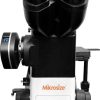
High-Fidelity Infinite Optical System
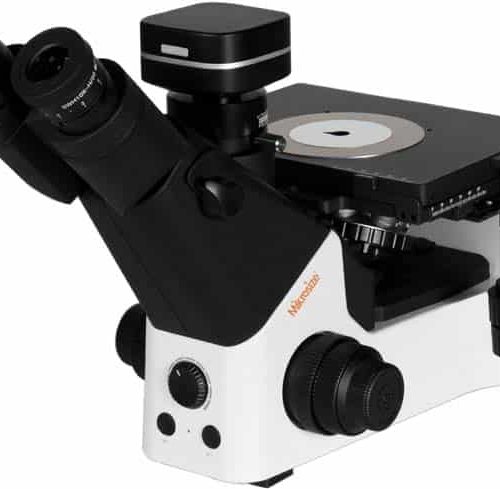
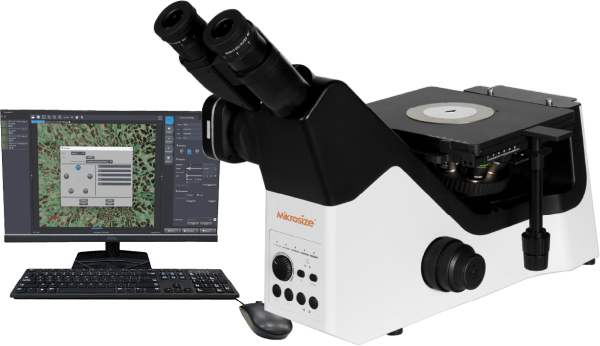
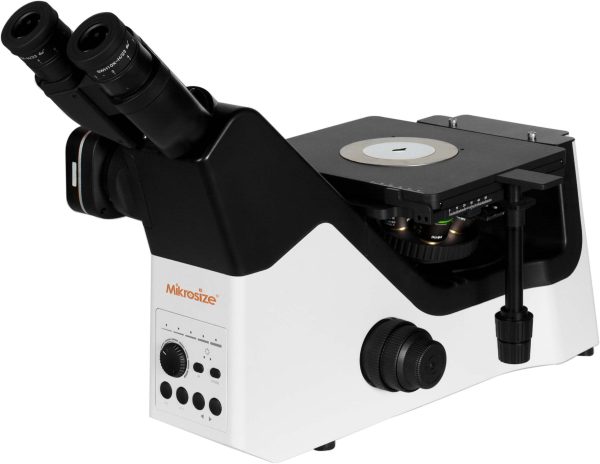
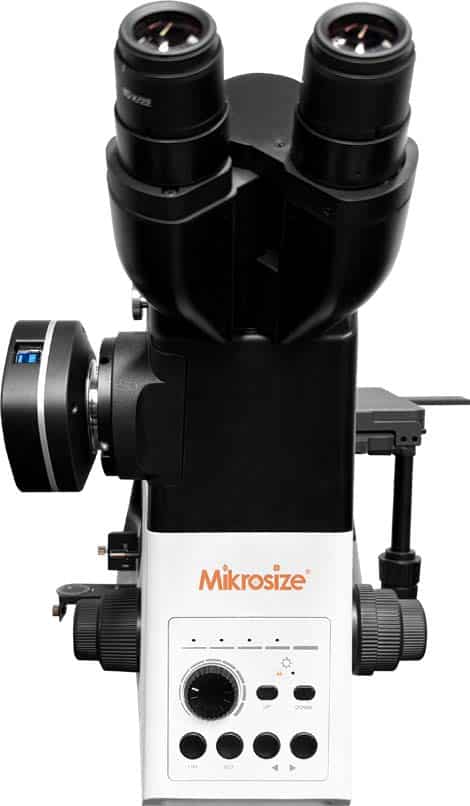
The iMetal-500 utilizes a premium infinite optical system paired with plan semi-apochromatic objectives and large-field, high-eyepoint eyepieces. This optical layout fully restores the true details of complex metallographic structures to meet your highest high-precision testing standards.
Intelligent Illumination Memory
The microscope automatically matches the optimal light intensity every time you switch objective magnifications. This smart automation eliminates repeated manual adjustments, reduces operational steps, prevents human setup errors, and vastly improves testing fluency.
True-Color Warm White LED Source
The integrated 4400K–4600K warm white LED light source boasts a color rendering index (CRI) of 95 or higher. By accurately restoring the natural color of your specimens, it prevents misjudgments caused by color deviation. This makes the system ideal for precision metallographic grading and digital image analysis.
Modular Contrast Attachments
Expand your laboratory capabilities with a rich variety of optional accessories. The flexible chassis scales easily to support brightfield/darkfield illumination, polarizing observation, and differential interference contrast (DIC) observation modes.
High-Precision Mechanical Stage & Focus
-
Micro-Focusing: The coarse and fine coaxial focusing system features an ultra-fine 1 $\mu\text{m}$ adjustment scale value for razor-sharp tracking.
-
Large-Travel Stage: A 50 \times 50\text{ mm} stage pairs with a five-hole encoded nosepiece to guarantee smooth part positioning, effortless operation, and stable geometric precision during long-term use.
Industrial Metallurgical Applications
Metal Grain Size & Inclusion Grading
Grade the grain boundaries and internal inclusions of steel, aluminum, and non-ferrous alloys. Metallurgical labs rely on these precise structural metrics to evaluate the success of heat treatment processes and verify material performance.
Structural Defect Tracing & Failure Analysis
Examine raw castings and active weldments to locate hidden structural defects like micro-cracks, gas blowholes, and internal porosity. Tracing these microscopic flaws allows quality control teams to determine the root cause of component failure and ensure product reliability.
Heat Treatment Optimization
Precisely track microstructural changes after specialized workflows like quenching, tempering, and annealing. Monitoring these grain transformations helps factory teams optimize process parameters to maintain total mass-production stability.
Weld Zone Structural Audits
Clearly display the microstructures of weld fusion lines and surrounding heat-affected zones (HAZ). Technicians can rapidly spot critical welding defects—such as incomplete penetration or trapped slag inclusions—to meet strict industrial acceptance criteria.
Coating & Powder Metallurgy Analysis
Analyze the internal porosity and sintered structural integrity of powder metallurgy components. The inverted layout also provides the contrast necessary to measure the exact thickness and bonding interface quality of industrial platings and surface coatings.
Materials Science Academic Training
Equip university engineering laboratories with a rugged, high-precision instrument. The user-friendly controls make it an excellent teaching tool for student experiments in metallographic structure observation and material performance analysis.
-468x500.jpg "iMetal-630-(1)")