
-600x581.png "iMetal-40UP(1)")
-1-600x450.jpg "iMetal-40UP图(4)-1")
-1-600x907.jpg "iMetal-40UP图(2)-1")
-1-600x578.jpg "iMetal-40UP图(3)-1")
-100x100.png "iMetal-40UP(1)")
-1-100x100.jpg "iMetal-40UP图(4)-1")
-1-100x100.jpg "iMetal-40UP图(2)-1")
-1-100x100.jpg "iMetal-40UP图(3)-1")
imetal-40up-metallographic-microscope-1
Advanced Chromatic Aberration Correction
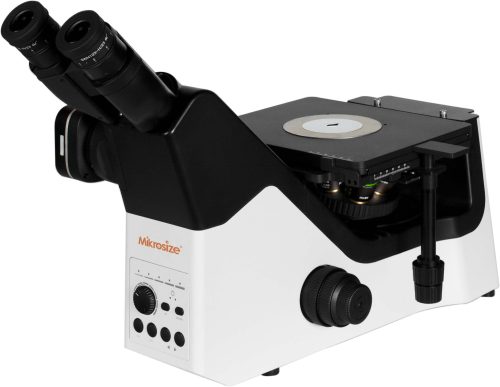
Our proprietary infinite-distance chromatic aberration correction system pairs with premium semi-reversed objective lenses. Combined with multiple observation modes and a high-resolution camera, this system delivers razor-sharp imaging that balances rich detail with deep contrast.
Three-Dimensional DIC Relief Imaging
The advanced Differential Interference Contrast (DIC) function converts minute surface height differences into highly visible, three-dimensional relief images. This allows inspectors to accurately locate hidden micro-defects like LCD conductive particles and ultra-thin wafer scratches.
Automated Software & Smart Nosepiece
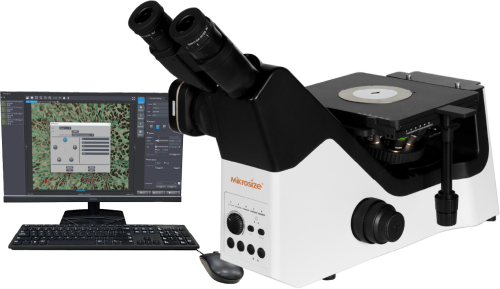
The integrated Mikrosize software suite streamlines your entire testing workflow by supporting automatic measurement, panoramic image stitching, and instant report generation. A dual-control electric objective lens turntable further accelerates sample scanning and increases throughput.
Ergonomic, Industrial-Grade Chassis
We designed the rugged frame to withstand demanding factory environments. It features a universal wide-voltage power system, a spacious 4-inch loading platform, and long-working-distance objective lenses to accommodate diverse industrial sample geometries safely.
Fully Tailored Configurations
Build the exact system your lab requires. You can customize the objective lens selection, camera pixel resolution, and observation tube style. The platform also supports future software and hardware upgrades to match shifting demands in semiconductor and material sciences.
High-Tech Industrial Applications
Semiconductor Wafer & Epitaxial Film Inspection
Locate delicate dislocation pits and step-flow defects on external epitaxial films. Utilizing high-resolution DIC technology helps quality teams identify nanoscale surface undulations early to boost production yields.
IC Packaging & Die Scratch Analysis
Inspect sharp edges, cutting burrs, and microscopic surface scratches on delicate dies. The microscope also allows engineers to analyze internal voids within packaging materials to ensure optimal chip lifespans.
MLCC Slice & Layer Quality Control
Conduct detailed Multi-Layer Ceramic Capacitor (MLCC) slice testing. The high-contrast optics reveal the precise distribution of internal electrode layers and their bonding interfaces with the dielectric material to flag hidden short-circuit hazards.
PCB Microsectioning & Solder Joint Evaluation
Perform microscopic analysis on printed circuit board (PCB) cross-sections. This allows lab technicians to evaluate the integrity of internal copper plating, audit solder joint quality, and find substrate material defects.
Material Science Grain Boundary Mapping
Observe the structural grains and grain boundaries of raw metals, alloys, and advanced ceramics. These visual evaluations help metallurgical labs assess heat treatment effects and provide data for material optimization.
-500x248.jpg)
-500x333.jpg)
-500x502.jpg "iBM-330C(1)")
-500x707.jpg)
-500x414.png "iVideo-0325-2D-(1)")